Decoding Internet Slang: Your Guide to Modern Lingo
Have you ever stumbled across a cryptic sequence of letters in a text message or social media post and wondered what it means? You’re not alone. Internet slang and acronyms are constantly evolving, creating a dynamic lingo that can be as baffling as it is fascinating. To help you navigate this digital dialect, we’ve decoded some of the most popular terms you’ll encounter online.
WYD – An abbreviation that stands for “What You Doing?” It’s often used in text conversations to inquire about someone’s current activity or plans. Next time you’re curious about what a friend is up to, a simple WYD can initiate a lively conversation.
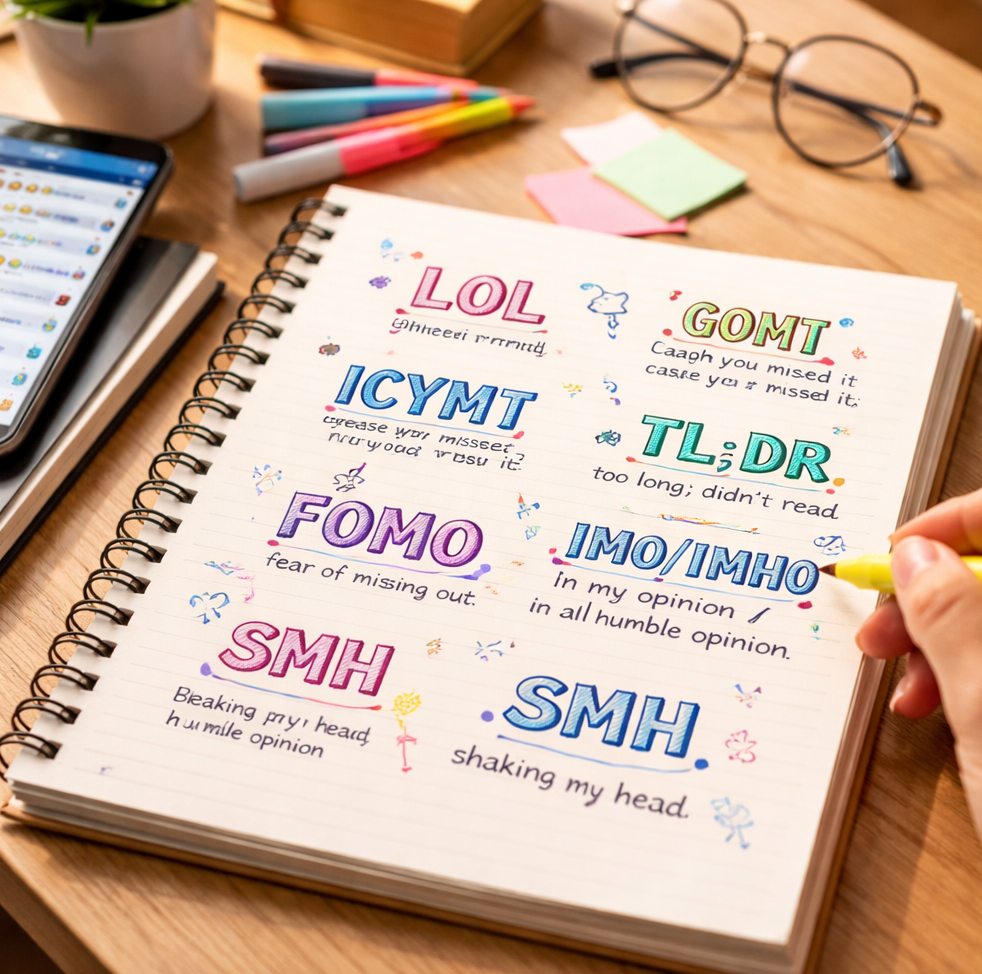
Another popular term you might have seen is “FOMO”, which stands for “Fear Of Missing Out.” This term captures the anxiety people feel when they think exciting events are happening elsewhere without them. FOMO is particularly common in the era of social media, where everyone’s highlights are on display.
Then, there’s TMI, short for “Too Much Information.” It’s used when someone shares overly personal or graphic details that might be more than what was expected or desired. If your friend is oversharing about their latest doctor’s visit or relationship drama, a TMI might be in order.
Moving on to YOLO, an acronym for “You Only Live Once.” It became popular as a motto encouraging people to take risks and enjoy life. Used to justify spontaneous decisions, it sometimes accompanies pictures of daring adventures or indulgent treats.
LOL, short for “Laugh Out Loud,” has become ubiquitous. Though originally intended to express genuine laughter, it’s often used to soften statements or fill awkward silences in digital conversations.
Let’s not forget about BRB, which means “Be Right Back.” This is a courteous way to let someone know you’ll temporarily step away from a chat or online interaction. It signals that the conversation is on hold but will resume shortly.
IDK is another commonly used acronym that stands for “I Don’t Know.” It’s a straightforward way to admit uncertainty or lack of knowledge on a topic. If you’re unsure about something in a discussion, IDK is a quick way to communicate that.
Also prevalent is the term “Ghosting”, which has slipped from digital arenas into everyday vocabulary. Ghosting refers to the abrupt cessation of communication with someone, without explanation. It’s often used in the context of dating, highlighting the challenges of modern communication.
A less common but intriguing term is “TL;DR”, standing for “Too Long; Didn’t Read.” It’s used to summarize lengthy texts or articles, providing a concise overview for those unwilling to read the entire piece. In forums and comment sections, a TL;DR can come in handy for quick skimming.
Lastly, we have AFK, meaning “Away From Keyboard.” It’s a way to notify others that you’re stepping away from the computer or device, often used in gaming or during online meetings.
The world of internet slang is vast and ever-changing. Understanding these terms not only helps in keeping up with current conversations but also enhances your ability to communicate swiftly and effectively in the digital realm. Whether you’re chatting with friends or engaging in online communities, a grasp of these acronyms can keep you in the loop and add a touch of modernity to your interactions.
